CNC Machining
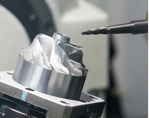
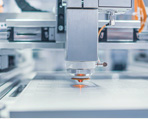
200 sets high precision CNC machine, covering turning, drilling, milling, broaching,grinding, wire EDM etc. all machining process.Machined prototypes and production parts in as fast as 1-3 days



In 2026, global climate governance continued to advance, and low-carbon transition has become a core proposition for the high-quality development of the manufacturing sector. Jinming Aerospace has continued to embed sustainable development into its overall business strategy, adhering to the development philosophy of "Green Operations, Low-Carbon Future". The Company has steadily advanced key initiatives including full-scope greenhouse gas accounting, green factory development, clean energy substitution, and low-carbon supply chain collaboration, managing its corporate carbon footprint in an all-round manner. This report objectively discloses the Company’s carbon emission performance and the results of low-carbon initiatives in 2026, reviews progress against phased targets, and presents to all stakeholders Jinming Aerospace’s practices and reflections on the path toward carbon peaking and carbon neutrality.
Jinming Aerospace takes 2022 as the base year for carbon emissions and has continuously carried out third-party verification of its Scope 1 and Scope 2 greenhouse gas emissions. In 2024, the Company’s total Scope 1 and Scope 2 carbon emissions reached 2,387 tCO₂e, a 29% decrease from the 2022 baseline, exceeding its short-term emission reduction target. In 2025, the distributed photovoltaic project at the Dongguan Industrial Park was completed and put into operation, delivering annual electricity savings of 504,000 kWh and an annual carbon reduction of approximately 221 tCO₂e, laying a solid foundation for optimizing the Company’s energy structure in 2026.
In 2026, the Company completed third-party verification of its Scope 3 greenhouse gas emissions. Building on the verification agreement signed with a third-party institution in October 2025, the third-party institution officially issued the Scope 3 verification certificate in February 2026, completing the systematic collection and accounting of emission data for key categories including upstream raw material procurement, logistics and transportation, and downstream product-related activities. This fills the data gap in carbon emissions across the full value chain, provides data support for subsequent supply chain emission reduction actions, and implements the HSE Management Committee’s resolution to "launch Scope 3 supply chain emission reduction actions no later than 2026".
Table 1 Historical Carbon Emission Data (2022–2025)
|
Category |
2022 Baseline |
2023 Data |
2024 Data |
2025 Data |
|
Scope 1 emissions (t CO₂e) |
112 |
138 |
142 |
761 |
|
Scope 2 emissions (t CO₂e) |
3,256 |
3,318 |
2,245 |
5,014 |
|
Total Scope 1 and Scope 2 emissions |
3,368 |
3,456 |
2,387 |
5,776 |
|
Scope 3 emissions (t CO₂e) |
— |
— |
— |
11,043 |
2.1 Green Factory Officially Certified
In September 2025, Dongguan Jinming launched its green factory certification project. In 2026, the Company fully implemented and operated the ISO 50001 Energy Management System and the ISO 45001 Occupational Health and Safety Management System, improved full-process systems covering infrastructure, energy and resource control, production process control, and environmental emission management, and completed self-assessment and material submission against the green factory evaluation criteria. In September 2026, the Dongguan Industrial Park officially obtained the "Green Factory" certification, achieving phased results in intensive land use, clean production, and low-carbon energy, marking a new milestone in the Company’s green management capabilities in manufacturing.
2.2 Signing of Green Electricity Procurement Agreement to Optimize the Energy Mix
To further reduce carbon emissions from purchased electricity under Scope 2 and promote the large-scale application of clean energy, Jinming Aerospace officially signed a green electricity procurement agreement in October 2026. Building on the existing self-consumption of rooftop photovoltaic power at its plants, the Company procures green electricity through market channels to increase the share of clean energy, reduce consumption of fossil-fuel-based electricity, and continuously curb indirect carbon emissions. This establishes a dual-path green power supply model of "self-generated photovoltaic power + purchased green electricity", supporting the realization of the Company’s operational emission reduction targets.
2.3 Deepening All-Dimensional Carbon Management and Launching Supply Chain Emission Reduction
Relying on the Scope 3 verification results completed in 2026, the Company officially launched its supply chain emission reduction work. It has sorted out the list of core suppliers, incorporated low-carbon performance into supplier evaluation criteria, communicated emission reduction requirements to value chain partners, and promoted upstream partners to carry out carbon inventories and energy-saving renovation.
Based on the medium- and long-term sustainable development goals determined by the HSE Management Committee:
Medium- and short-term goals: Launch Scope 3 supply chain emission reduction actions no later than 2026; and, with 2022 as the base year, achieve a 50% reduction in the Company’s own-operation carbon emissions no later than 2030. In 2026, the Company completed Scope 3 verification and officially launched its supply chain emission reduction work, successfully achieving this milestone target. Going forward, it will continue to track Scope 1 and Scope 2 emissions and steadily advance toward the 2030 target of a 50% emission reduction.
Long-term goal: Achieve full carbon neutrality in both the Company’s own operations and its supply chain no later than 2050.
In 2026, Jinming Aerospace completed its Scope 3 verification, obtained the Green Factory certification, and launched green electricity procurement. This is a key year for the Company’s shift from reducing carbon emissions at its own production end to extending carbon management across the full value chain. These achievements would not have been possible without the efforts of all employees, the collaboration of supply chain partners, and the supervision of all sectors of society.
Looking ahead, Jinming Aerospace will continue to practice the philosophy of "Green Operations, Low-Carbon Future". Relying on the green factory management system, it will expand the scale of green electricity application and, using the Scope 3 verification data as a starting point, drive upstream and downstream partners to jointly carry out low-carbon upgrades while continuously increasing investment in low-carbon processes and energy-saving technologies. Though the road ahead is long, we will get there by taking action. Jinming Aerospace will continue to manage the carbon footprint of the full value chain with practical actions, actively respond to the challenge of global climate change, and contribute the strength of Jinming to sustainable development.
Let’s Get Started Get A Quote